2026-08-21 · Tony Ramirez
How to Spot Pipe Leaks in 1950s North Hills Ranch Houses
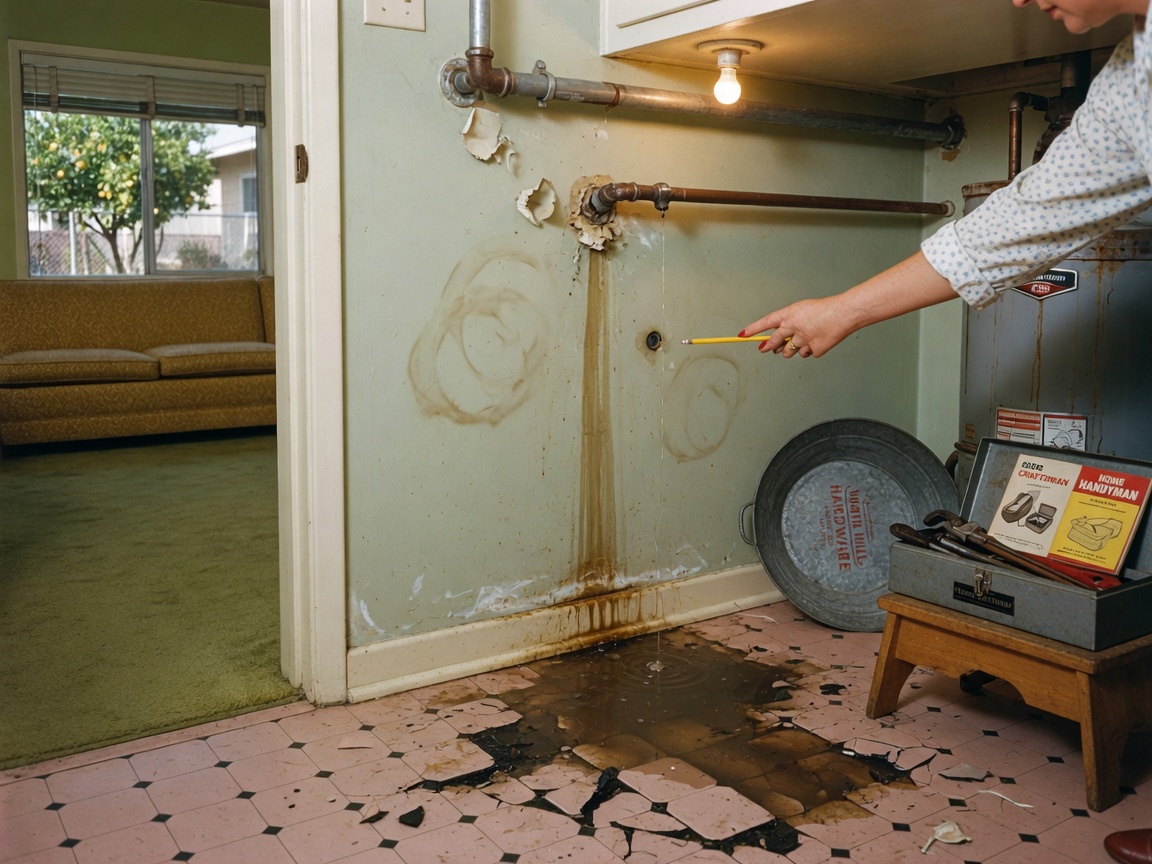
Pipe leaks in 1950s North Hills ranch houses typically appear first as water stains on ceilings or baseboards near bathrooms and kitchens, along with unexplained drops in water pressure after 50-plus years of galvanized pipe service.
Visible Indicators in Flooring and Ceilings
1950s ranch homes in North Hills East and North Hills West were built with slab-on-grade foundations or shallow crawl spaces that route supply lines along exterior walls and under tile or hardwood. Look for buckling vinyl in laundry rooms or darkened grout lines in bathrooms where slow drips from corroded joints have wicked upward. In dry summers typical of the hot-summer Mediterranean climate, these marks stand out because outdoor irrigation rarely masks them. Warped door frames near utility rooms or musty smells rising from floor vents also point to hidden moisture trapped against the slab. Owners in nearby Panorama City often report the same pattern when original 3/4-inch galvanized lines finally perforate after decades of mineral buildup from Los Angeles water.
Pressure and Fixture Clues Specific to Older Homes
Turn on multiple fixtures at once and note whether flow at the kitchen sink drops sharply when the shower runs; this often signals a pinhole leak upstream in the main line feeding 1950s ranch layouts. Check the water heater pressure relief valve and exposed pipes under sinks for white crusty deposits that indicate slow seepage. In Granada Hills and Van Nuys properties of the same era, residents frequently discover reduced hot-water volume first because the heater sits farthest from the meter. A sudden spike in the monthly bill without increased usage points to underground supply leaks common where soil movement around Sepulveda Basin stresses aging joints. These checks require no special tools yet catch problems before drywall saturation spreads.
How Local Terrain and Climate Affect Leak Detection
North Hills sits on alluvial soils that expand and contract with the region's dry summers and occasional winter rains, stressing rigid galvanized runs under slabs. Homes backing onto North Hills Park or near the Sepulveda Basin often experience slightly higher groundwater that pushes moisture into any breach faster than in higher inland lots. Because summers stay arid, indoor humidity from a leak registers quickly on a simple moisture meter, unlike coastal zones. The same conditions that keep lawns brown also mean roof or irrigation leaks are less likely to confuse diagnosis, letting owners focus on supply and drain lines inside the 1,200- to 1,800-square-foot ranch footprints typical here.
Next Steps When Signs Point to Hidden Damage
Document every stain and pressure reading with dated photos before opening walls, then contact a specialist for targeted testing rather than broad demolition. Professional leak detection services isolate the exact joint without guessing. If moisture has already reached subflooring, review the mold growth timeline after a North Hills kitchen leak to understand how quickly spores can colonize in the local climate. For larger affected areas, water damage restoration crews familiar with 1950s construction can dry and repair without unnecessary removal of original hardwood. Prestige Environmental operates from 15240 Nordhoff St Unit 10 North Hills, CA with hours Mon–Fri 8am–6pm and Sat 9am–2pm to handle these inspections promptly.