2026-08-21 · Tony Ramirez
Winter Rain Flooding Risks for North Hills Homes Near The 405
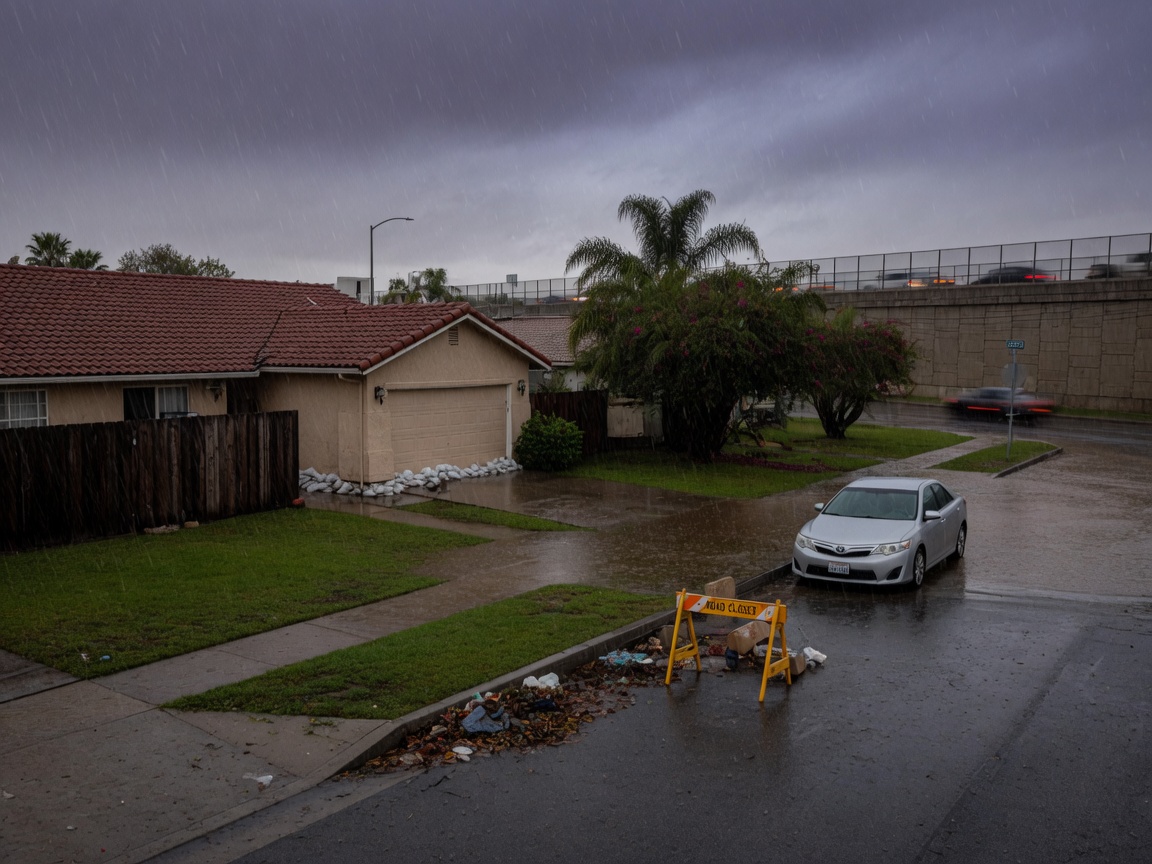
Homes within a half-mile of the 405 in North Hills East and North Hills West see surface water rise 6–18 inches during sustained winter storms because the freeway embankments block natural sheet flow toward the Sepulveda Basin. The hot-summer Mediterranean climate delivers most of its 15–18 inches of annual rain between December and March, often in 1–3 inch bursts over 24 hours that exceed the capacity of 1950s–1970s street gutters and backyard swales.
Drainage Challenges Along the 405 Corridor
The 405 sits on an elevated fill that cuts across the northern San Fernando Valley, forcing winter runoff from Granada Hills and North Hills West to pond against the western shoulder before it can reach the Los Angeles River channel. Concrete-lined channels built in the 1960s were sized for smaller storms; today they back up when debris from North Hills Park collects at grates. Older single-story ranch homes on Nordhoff Street and surrounding blocks have finished floors only 8–12 inches above grade, so even moderate ponding enters garages and laundry rooms. Soil in this flat basin is heavy clay that holds moisture for days, prolonging saturation under slabs. Residents in Panorama City just south report similar patterns after the same weather systems.
Common Flooding Points in North Hills East and West
Low spots along Plummer Street and near the 405 on-ramps collect water first because storm drains were installed before the area’s population doubled. Homes built before 1978 often lack French drains or proper lot grading, so water travels under fences into crawl spaces. Properties backing up to the Sepulveda Basin wildlife area receive additional sheet flow when the basin’s perimeter roads are closed during heavy rain. In North Hills East, the slight eastward slope sends water toward Van Nuys rather than the basin, overloading older 18-inch laterals. These conditions turn a 2-hour rain event into 48–72 hours of standing water against foundations.
How Los Angeles Winter Storms Affect Local Housing Stock
The region’s dry summers leave soil cracked and hydrophobic by October, so the first November rains run off instead of soaking in. Subsequent storms hit saturated ground and produce rapid runoff toward the 405. Stucco-clad homes from the 1960s have weep holes at the base that become entry points once water sits against the wall for more than a day. Slab-on-grade construction common here means any water that reaches the perimeter can wick under the slab edge, raising indoor humidity levels that slow natural drying. Nearby Van Nuys and Granada Hills share the same housing age and terrain, so the same storm patterns produce comparable damage reports each winter.
Practical Steps Homeowners Can Take Before Storms Arrive
Clear leaves and sediment from street gutters and backyard drains every October. Re-grade soil 6 inches below siding and slope it away from the foundation at 6 inches over 10 feet. Install backflow valves on sewer cleanouts if your lot sits below the street. Check that downspouts discharge at least 5 feet from the house. For homes near North Hills Park, add a small berm along the rear fence to redirect basin runoff. These steps reduce the volume that reaches the structure but do not eliminate the need for professional equipment when water does enter.
When to Contact Emergency Water Extraction Services
If water reaches the interior baseboards or stands in the crawl space longer than 24 hours, extraction and drying must begin immediately to limit microbial growth. Technicians use truck-mounted pumps rated at 200–300 gallons per minute followed by industrial air movers and dehumidifiers sized for the square footage. Properties near the 405 often require extra drying time because the clay subgrade releases moisture slowly. After extraction, moisture readings should drop below 15 percent on wood and 1 percent on concrete before reconstruction starts. Homeowners in North Hills East and West can reach Prestige Environmental at 15240 Nordhoff St Unit 10 North Hills, CA during Mon–Fri 8am–6pm or Sat 9am–2pm for assessment.