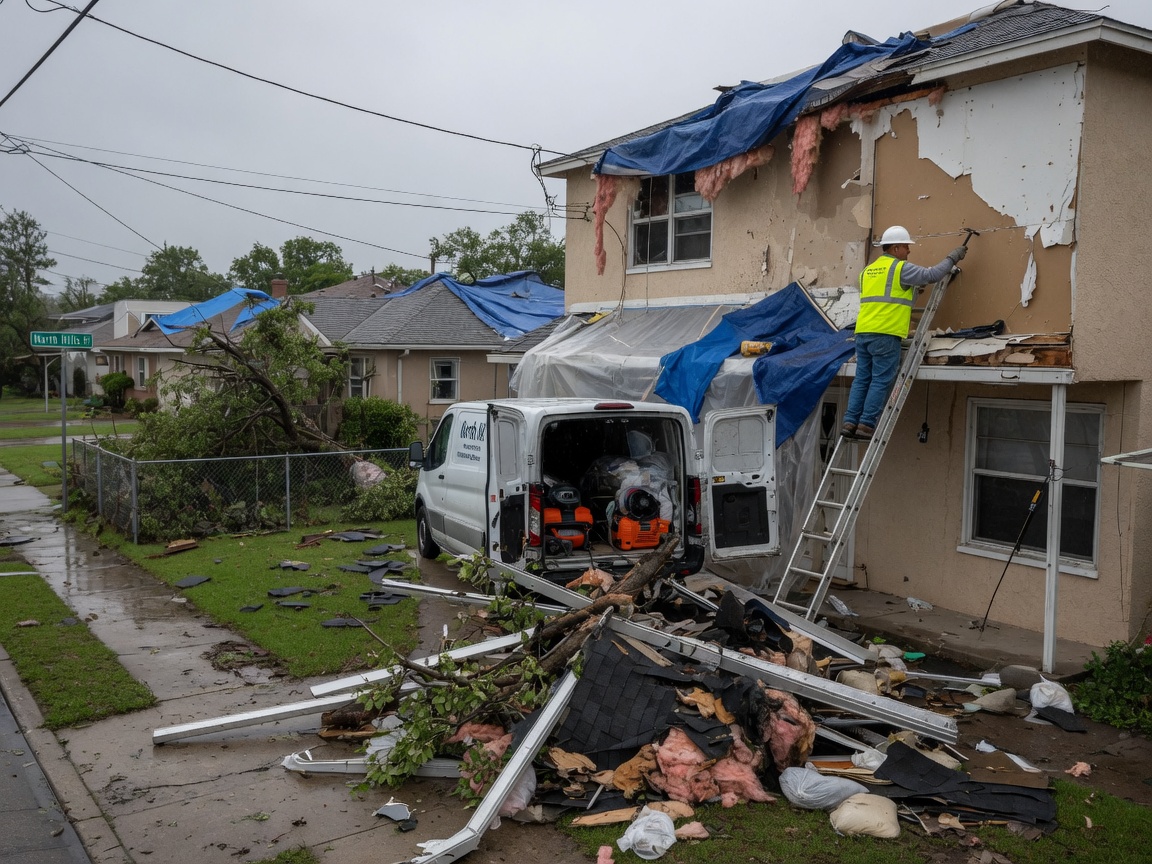
North Hills homes built in the 1950s and 1960s often have older stucco and wood framing that absorbs water quickly during the rare but heavy downpours typical of the hot-summer Mediterranean climate. When storms hit, water travels along rooflines and into wall cavities faster than in newer builds, especially in North Hills East where many properties sit on slightly sloped lots that direct runoff toward foundations. Technicians must open walls early to check for trapped moisture rather than relying on surface drying alone.
Proximity to Sepulveda Basin increases the risk of sediment-laden water entering crawl spaces and garages during overflow events, which then settles into soil around Granada Hills and Panorama City borders. This sediment holds moisture against framing for weeks, raising the chance of hidden rot if extraction skips the subfloor. Local crews carry extra pumps and air movers rated for fine silt because standard shop vacs clog fast on basin-adjacent jobs.
Los Angeles County building codes require permits for any structural drying that affects load-bearing walls after storm events. Skipping documentation can delay insurance claims and force rework. Experienced crews photograph every step and leave access panels so homeowners can verify drying progress before walls are closed.
Technician insight
In North Hills the thing that catches most people out with Storm Damage Restoration is how quickly water travels behind the stucco on 1960s homes once it reaches the paper backing; the flat lots near North Hills Park hold that moisture against the slab longer than most expect, so we always pull baseboards on the first visit.
North Hills East Garage Flood
Heavy rain pushed basin overflow into a 1962 home's garage. We found six inches of silt-laden water against the rear wall. Extraction and drying equipment ran for four days until readings dropped below 12 percent. Homeowner could reopen the space without further demolition.
Storm Damage Restoration Services We Offer
✓Emergency Roof Tarping
Install temporary reinforced tarps over storm-damaged roofs in North Hills to stop additional water entry until permanent repairs are scheduled.
✓Storm Flood Water Extraction
Remove standing water from garages, basements, and yards using high-volume pumps suited for sediment-heavy runoff near Sepulveda Basin.
✓Post-Storm Structural Drying
Deploy industrial air movers and dehumidifiers inside wall cavities and under floors of 1950s North Hills homes to prevent hidden mold growth.
✓Wind-Driven Rain Damage Repair
Locate and dry water that entered through window and door seals after high winds push rain into stucco homes common in North Hills West.
✓Sediment and Debris Removal
Clear mud and debris left by basin overflow from crawl spaces and driveways so extraction equipment can reach remaining moisture.
Storm Damage Restoration Cost in North Hills, CA
| Service | Typical Range | What Affects It |
|---|---|---|
| Initial Assessment | Free | During listed business hours at 15240 Nordhoff St |
| Storm Water Extraction | $400–$900 | Higher when sediment from Sepulveda Basin is present |
| Structural Drying Setup | $600–$1,400 | Varies by square footage and number of wall cavities opened |
| Emergency Tarping | $250–$550 | Depends on roof pitch and storm damage extent |
Ranges are typical for North Hills, CA and confirmed with an exact written quote before any work starts.
How it works
- 1
On-Site Assessment
Technician inspects roof, walls, and foundation for water paths, noting age of home and proximity to North Hills Park drainage.
- 2
Water Extraction
High-capacity pumps remove standing water and sediment while protecting nearby landscaping in North Hills East yards.
- 3
Drying and Monitoring
Equipment runs until moisture readings meet industry standards; daily checks logged for insurance in Los Angeles County.
- 4
Final Verification
Homeowner walks the property to confirm all affected areas are dry before walls are closed.
Pricing
Upfront quotes provided after inspection; final cost depends on water volume and access difficulty.