2026-08-21 · Tony Ramirez
Local Tree Root Issues Affecting Sewer Lines in North Hills Yards
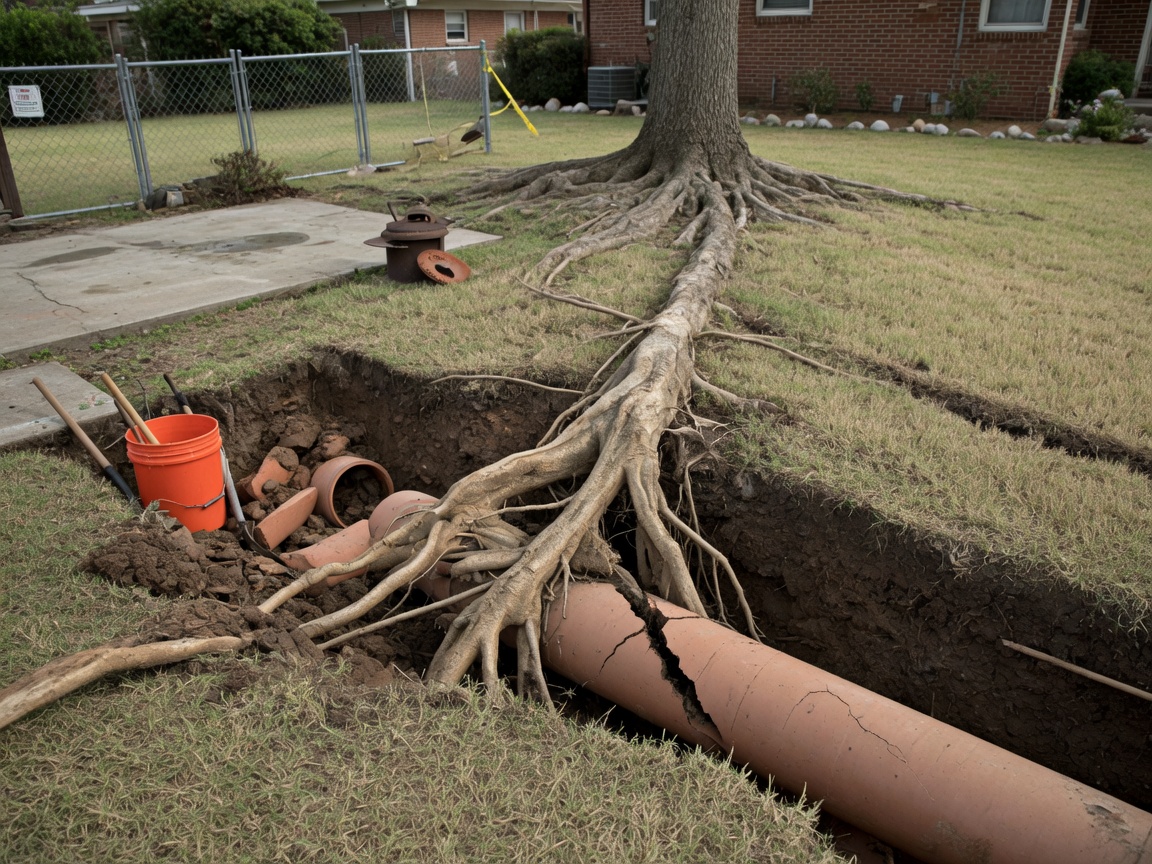
In North Hills yards, tree roots from species like ficus and sycamore typically reach sewer lines within 10–20 years, especially in homes built before 1980 with clay or cast-iron pipes near North Hills Park and the Sepulveda Basin.
Common Trees and Root Behavior in North Hills
North Hills East and North Hills West feature many mature ficus, sycamore, and oak trees planted decades ago around single-family homes. The hot-summer Mediterranean climate with dry summers drives roots to seek moisture from sewer lines, which run 3–6 feet underground in most Granada Hills-adjacent properties. Roots follow the path of least resistance along pipe joints, entering through small cracks caused by soil shifting in the Los Angeles basin terrain. This pattern appears frequently in yards bordering the Sepulveda Basin where groundwater fluctuates seasonally. Older housing stock from the 1950s–1970s uses 4-inch clay pipes that crack more easily than modern PVC, allowing faster intrusion during the long dry periods from May through October.
How Roots Damage Sewer Lines Locally
Roots exert pressure that widens existing joints in North Hills sewer lines, leading to complete blockages within 5–8 years once they enter. The clay-heavy soils common around North Hills Park retain less moisture in summer, pushing roots harder toward the consistent water source inside pipes. In Van Nuys and Panorama City homes with similar vintage plumbing, this results in slow drains first, then full backups during heavy winter rains. Soil movement from occasional seismic activity in Los Angeles County further stresses pipes, creating entry points. Homeowners near Granada Hills often notice issues after 15–25 years when trees reach full canopy size and root systems extend 30–50 feet outward.
Signs of Intrusion and Resulting Water Issues
Early signs include gurgling toilets and slow showers in North Hills homes, progressing to sewage odors near cleanouts. When roots fully block lines, backups can flood crawl spaces or basements, especially in properties with slopes toward the Sepulveda Basin. These events create standing water that requires prompt sewage cleanup to prevent structural damage. Leak detection helps locate root entry points before they spread. Prolonged moisture from undetected backups often leads to mold within 48–72 hours in wall cavities, following patterns seen in similar kitchen leak scenarios detailed in our guide on mold growth timelines.
Practical Steps for North Hills Homeowners
Inspect yards for trees within 20 feet of sewer cleanouts, particularly ficus near property lines in North Hills West. Schedule camera inspections every 3–5 years for homes over 30 years old to catch intrusions early. Avoid planting new water-seeking trees closer than 25 feet from lines in the dry climate. When backups occur, addressing the water damage quickly limits secondary issues like those covered in crawl space drying cost discussions for North Hills properties. Regular root cutting combined with pipe lining provides longer-term protection without full excavation in established neighborhoods.