2026-08-21 · Tony Ramirez
Removing Standing Water from North Hills Patios and Walkways
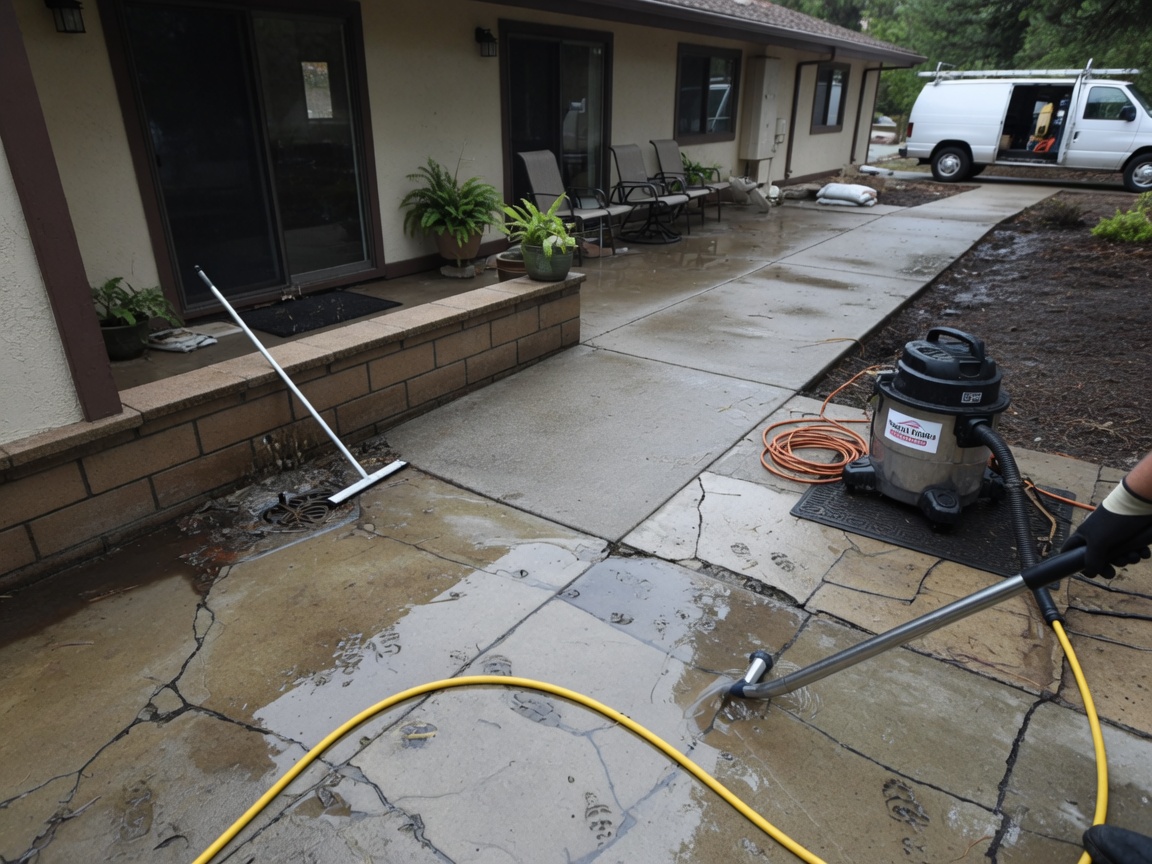
Removing standing water from North Hills patios and walkways begins with locating the source such as over-sprayed sprinklers or clogged French drains common around 1950s ranch houses, then using a wet vac or portable pump to extract 1-3 inches of water within the first hour to limit concrete saturation.
Local Climate and Drainage Challenges
North Hills sits in a hot-summer Mediterranean climate with dry summers that encourage homeowners to run irrigation systems heavily around North Hills Park and near Sepulveda Basin. This creates consistent runoff that collects against raised walkways and patio edges in North Hills East and North Hills West. Winter rains, though infrequent, hit hard-packed Los Angeles County soil and flow toward lower lots in Panorama City and Granada Hills. The result is water trapped against stucco foundations and under patio furniture pads for days. Older concrete in these neighborhoods lacks modern slope, so even small volumes sit longer than in newer Van Nuys developments. Crews often see moisture wick upward into adjacent framing when extraction is delayed past 24 hours.
Initial Assessment and Safety Steps
Walk the perimeter first and note any cracks or settled sections where water pools deepest. Check nearby downspouts and hose bibs for leaks that feed the same low spots. Wear rubber boots and shut off irrigation timers before starting extraction. In North Hills West, many lots slope toward the street, so water can migrate under fences into neighboring yards if not contained with sandbags or absorbent socks. Document the depth at multiple points with a ruler so you can confirm when the surface is truly dry. If the water smells musty or contains sediment from Sepulveda Basin flood channels, treat it as contaminated and avoid skin contact.
Extraction Methods for Concrete Surfaces
Begin with a 2-3 gallon wet vac to pull surface water, moving in overlapping passes across the entire patio. Follow with a submersible pump if depth exceeds 2 inches near walkways. For stubborn film left on broom-finished concrete, apply a fan-forced air mover at 45-degree angles to speed evaporation without driving moisture into expansion joints. In dry summer months, this process finishes in 4-6 hours on most North Hills patios. During rare wet periods, repeat extraction the next morning because overnight dew can re-wet the slab. Avoid pressure washing until all standing water is gone, as high-pressure spray forces water into control joints and under tile.
When to Involve Professional Equipment
If water has reached the edge of the house or entered weep holes, emergency water extraction crews bring truck-mounted units that remove 10-15 gallons per minute and pair it with structural drying fans sized for 1,200-square-foot slabs. Homeowners in North Hills East often discover hidden saturation under pavers after a single irrigation cycle; pros use moisture meters to map the full extent before mold sets in. See the timeline in Mold Growth Timeline After a North Hills Kitchen Leak for how quickly spores appear on damp concrete borders.
Prevention for Local Properties
Re-grade soil 6-8 inches away from the slab edge and install 4-inch perforated drain pipe tied to a pop-up emitter that discharges toward the street. Replace old sprinkler heads with low-flow rotors aimed away from walkways. In Granada Hills and Northridge homes with similar 1950s construction, adding a 1/4-inch slope per foot during concrete repairs stops most pooling. Check How to Spot Pipe Leaks in 1950s North Hills Ranch Houses for early signs that underground lines are contributing to patio moisture. Prestige Environmental operates from 15240 Nordhoff St Unit 10 North Hills, CA and can be reached Monday through Friday 8am–6pm or Saturday 9am–2pm for extraction support.