2026-08-21 · Tony Ramirez
Checking for Water Intrusion Around North Hills Window Frames
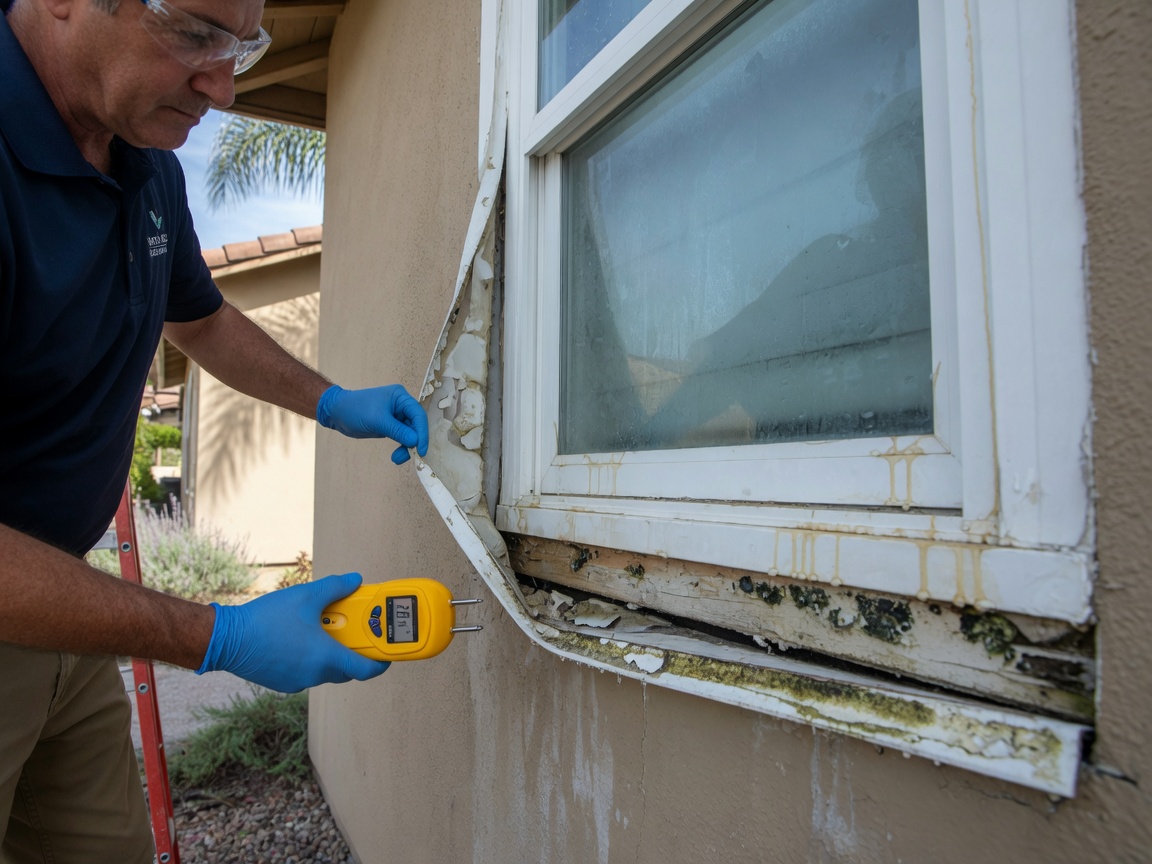
Water intrusion around North Hills window frames typically appears as dark staining on sills or bubbling paint within 2–4 weeks after winter rains hit the hot-summer Mediterranean climate. Homes in North Hills East and North Hills West built in the 1950s and 1960s feature single-pane aluminum frames set into stucco that expand and contract with temperature swings, creating gaps where water enters. Checking these areas starts with a visual walk-through after any rain, focusing on the bottom corners where water pools first.
Visual Signs in Local Ranch Homes
Begin at eye level and work down the frame. Look for discolored drywall above the window header or peeling caulk along the sill. In North Hills, many 1950s ranch houses have original wood sills that absorb moisture and show cupping or dark rings within months. Check the exterior stucco for hairline cracks near the frame, especially on west-facing walls that receive afternoon sun after rain. If you see mold spots along the lower sash or feel soft drywall when pressing near the frame, moisture has already moved past the surface. These signs appear faster in homes near North Hills Park where afternoon winds push rain against windows.
Tools and Step-by-Step Checks
Use a moisture meter set to wood or drywall mode and take readings at three points: the sill center, left corner, and right corner. Readings above 15 percent indicate active intrusion. Run a bright flashlight along the frame at night to spot gaps where light leaks through. Slide a thin plastic card between the frame and stucco to test for movement; any give means the seal has failed. After heavy rain, place a dry paper towel on the interior sill overnight and check for dampness the next morning. Document each location with photos and readings so patterns become clear over multiple storms.
How Local Climate and Terrain Affect Intrusion
North Hills receives most rainfall between November and March, often in short, intense bursts that overwhelm older window seals. The flat terrain around Sepulveda Basin allows water to sit against foundations longer than in hillier parts of Los Angeles County. Dry summers bake the stucco and aluminum, widening any existing gaps before the next wet season arrives. Homes in nearby Van Nuys and Panorama City share the same 1950s construction and face identical issues when winds carry moisture from the basin. Checking frames after each storm prevents water from traveling down into the slab, a common path in these ranch houses.
When Further Testing or Repair Is Needed
If moisture readings stay elevated for more than 48 hours or you find soft wood in the sill, contact a professional for leak detection to trace hidden sources. Persistent intrusion often connects to roof flashing or plumbing lines behind the wall, topics covered in How to Spot Pipe Leaks in 1950s North Hills Ranch Houses. For widespread damage that reaches the floor, review guidance in Inspecting Slab Foundations for Moisture After Heavy Valley Rain before deciding on drying versus replacement. Prestige Environmental operates from 15240 Nordhoff St Unit 10 North Hills, CA with hours Monday–Friday 8am–6pm and Saturday 9am–2pm to handle these inspections.