2026-08-21 · Tony Ramirez
Inspecting Slab Foundations for Moisture After Heavy Valley Rain
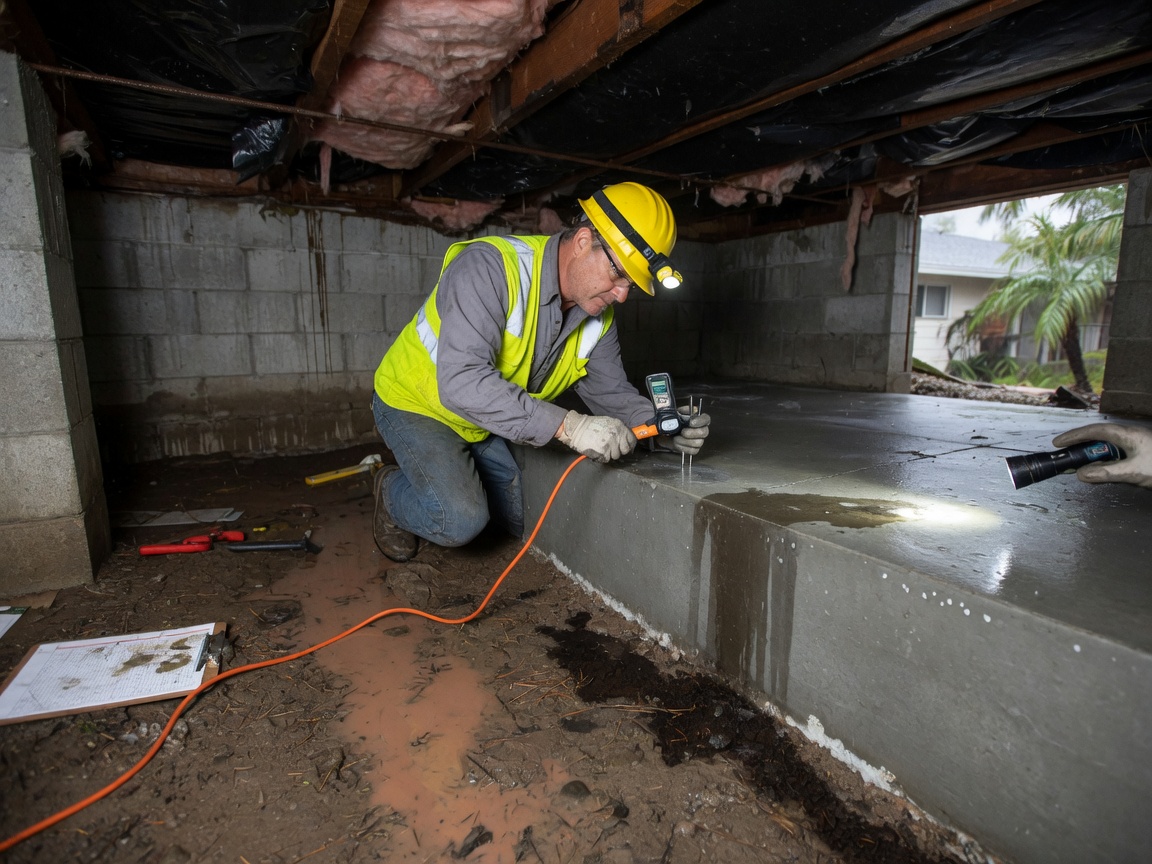
After heavy rains in the San Fernando Valley, inspect slab foundations within 48 to 72 hours while soil moisture is still elevated. North Hills homes built on flat valley terrain near Sepulveda Basin commonly see water migrate under slabs because the Mediterranean climate brings concentrated winter downpours after long dry summers, and many 1950s-1960s ranch houses lack modern perimeter drainage.
Checking Perimeter Grading and Drainage
Walk the entire foundation perimeter and look for soil that slopes toward the slab or stands within 6 inches of the stucco. In North Hills West neighborhoods, older lots often have settled fill that directs runoff from North Hills Park toward the house. Use a 4-foot level to confirm positive slope away from the foundation at a minimum of 6 inches over 10 feet. Note any French drains or area drains near the Sepulveda Basin side of the property; these frequently clog with silt after storms. Photograph standing water against the slab at the same time each day for three days to track how quickly it recedes. Poor grading here directly increases hydrostatic pressure under the slab edge.
Using Moisture Meters on Slab Edges
A pin-type or pinless moisture meter gives reliable readings on the outer 18 inches of the slab where water first enters. Take readings at 2-foot intervals around the entire perimeter, recording both the concrete surface and the base of any adjacent drywall or baseboard. In North Hills East homes, slabs poured directly on grade without vapor barriers commonly show 15 to 25 percent moisture content after a multi-day rain event. Compare readings on the north and south sides; the north side near Granada Hills tends to stay wet longer because it receives less direct sun. Mark any spot above 18 percent with tape so it can be rechecked after drying equipment runs. These numbers help decide whether dehumidification or further investigation is needed.
Looking for Hidden Slab Leaks
Heavy rain can mask or worsen existing slab leaks from 1950s galvanized or cast-iron supply lines common in North Hills ranch houses. Listen for running water when all fixtures are off and check the water meter for movement. If readings change, schedule professional leak detection before assuming rain is the only source. Compare this situation to the guidance in How to Spot Pipe Leaks in 1950s North Hills Ranch Houses for additional indicators specific to local plumbing. Document any new hairline cracks that appear wider after the rain; these often align with plumbing trenches under the slab.
Documenting and Drying the Slab
Photograph every reading, crack, and grading measurement with date and time stamps. If moisture remains above 12 percent after 72 hours, bring in structural drying equipment sized for the square footage of affected rooms. Place air movers to create airflow across the slab and position dehumidifiers to pull 50 to 70 pints per day in typical North Hills living spaces. Re-test every 24 hours and continue until readings stabilize below 10 percent. Homes near Panorama City often need longer drying times because the denser urban lots limit airflow around the foundation. Keep records of all readings to support any future water damage restoration decisions.