2026-08-21 · Tony Ramirez
Drying Carpet After an Upstairs Bathroom Overflow in North Hills
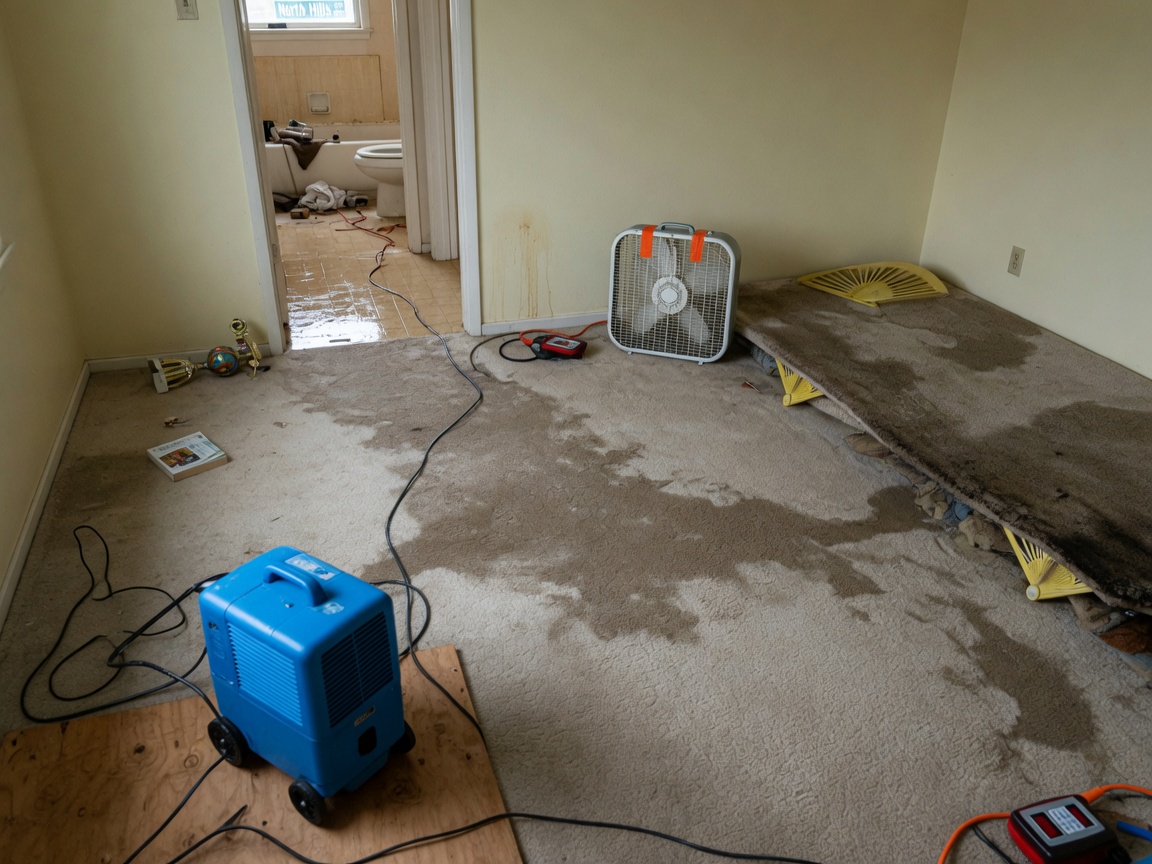
Drying carpet after an upstairs bathroom overflow in North Hills usually requires 48 to 72 hours of continuous airflow and dehumidification once standing water is removed, though thicker pads or heavy saturation can stretch the timeline to four or five days.
Initial Assessment and Containment
Start by locating the exact source in the bathroom above and stopping the flow, then check how far water has traveled through subfloors into North Hills East and North Hills West homes built mostly in the 1950s and 1960s. These single-story ranch houses often have carpet over plywood or particleboard that absorbs moisture quickly along seams near toilets or tubs. Walk the rooms below with a moisture meter to map wet zones, paying special attention to areas where water may have pooled near baseboards or under vanities. Contain the affected space with plastic sheeting to keep humidity from spreading into dry rooms, and remove any furniture or rugs that could trap moisture against the carpet. In the dry-summer Mediterranean climate of Los Angeles, low outdoor humidity helps once windows are managed, but indoor temperatures above 75 degrees can slow evaporation if not controlled.
Emergency Water Extraction Steps
Remove as much free water as possible before drying equipment arrives, using a wet vac or portable extractor on the carpet surface and along edges where water collects. Lift carpet edges carefully in North Hills West properties to expose the pad, then extract from both sides to pull moisture from the backing. Focus on hallways and stairs that connect upstairs bathrooms to lower levels, since water follows gravity through small gaps around pipes. Avoid walking on saturated areas to prevent pushing water deeper into the subfloor. Emergency Water Extraction crews bring truck-mounted units that handle larger volumes faster than rental machines, especially when overflows reach 10 gallons or more. After extraction, place air movers at 45-degree angles along walls to create a vortex that moves air across the carpet face.
Carpet and Pad Drying Process
Once visible water is gone, run commercial dehumidifiers alongside air movers for 48 hours minimum, monitoring moisture levels every four to six hours with pin meters. In North Hills homes near Sepulveda Basin, higher groundwater can keep subfloors damp longer, so check crawl space access points if the house has one. Pull the carpet back in sections if the pad remains wet, replace the pad entirely when it holds more than 20 percent moisture by weight, and reinstall the carpet only after both layers test dry. Direct heat from portable heaters can help in cooler months but must stay below 90 degrees to avoid shrinking synthetic fibers common in older Granada Hills and Van Nuys border homes. Rotate equipment positions daily to reach under heavy furniture footprints and along north-facing walls that stay cooler.
Mold Prevention After Drying
North Hills summers stay dry, yet trapped moisture under carpet can still trigger mold within 48 hours if humidity lingers above 60 percent. Run dehumidification services until relative humidity drops below 50 percent and all surfaces read under 12 percent moisture content. Inspect adjacent walls for wicking, especially in 1950s construction where plaster meets carpet tack strips. How to Spot Pipe Leaks in 1950s North Hills Ranch Houses outlines common leak points that often cause repeat overflows. Vacuum the carpet thoroughly once dry to remove any silt left from the water, then apply an antimicrobial treatment only if visible growth appears. Homeowners in Panorama City and surrounding neighborhoods should schedule follow-up checks two weeks later, since hidden pockets near baseboards can re-wet during the first rain.
When Professional Help Is Needed
Call Water Damage Restoration teams when the overflow exceeds what a standard wet vac can handle or when water has reached multiple rooms and the subfloor. Technicians based at 15240 Nordhoff St Unit 10 can respond during Mon–Fri 8am–6pm or Sat 9am–2pm with the right extraction and drying gear sized for local ranch layouts. They also coordinate with reconstruction crews if carpet or padding must be replaced. Homeowners who attempt full drying without meters often miss moisture in tack strips or underlayment, leading to odors that surface weeks later in the hot-summer climate.