2026-08-21 · Tony Ramirez
Preventing Water Damage from Sprinkler Overspray Near Wood Fences
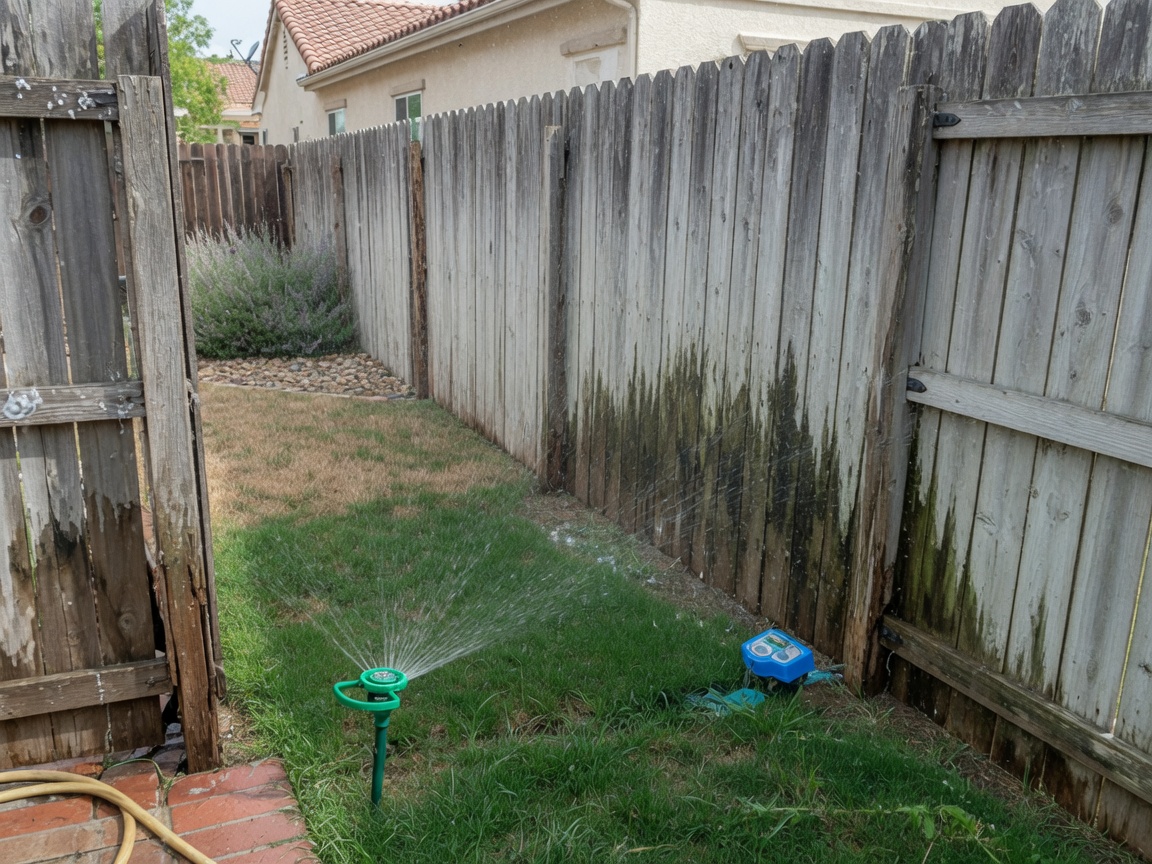
In North Hills, wood fences last longer when sprinkler heads are angled or replaced with low-angle rotors that keep spray at least 12 inches below the bottom rail. This single change stops the constant wetting that breaks down cedar and redwood in yards across North Hills East and North Hills West.
How Overspray Damages Fences in Local Yards
North Hills homes built from the 1950s through 1980s commonly use 6-foot redwood or cedar fences set directly into soil near lawn edges. The region's dry summers force daily irrigation cycles that send fine mist onto lower rails and posts for hours. Once moisture content in the wood stays above 20 percent for more than a few days, surface checking appears, followed by soft rot at ground level within two to three seasons. Properties bordering North Hills Park or the Sepulveda Basin see extra humidity from the greenbelt, which slows drying and shortens fence life by several years compared with inland blocks.
Adjusting Existing Sprinkler Heads
Walk the perimeter at dusk when heads are running and mark every arc that crosses the fence line. Replace standard pop-up sprays with 4-inch or 6-inch high-pressure rotors set to a 90-degree arc aimed inward; these models deliver water in larger droplets that fall before reaching the wood. Install a 4-inch concrete mow strip or 6-inch gravel band along the fence base so heads can be lowered without hitting turf edges. In Granada Hills and Panorama City yards with similar layouts, this retrofit typically cuts overspray contact by 80 percent without reducing lawn coverage.
Adding Physical Barriers and Drip Conversion
Mount 8-inch-wide aluminum flashing on the inside face of the fence, overlapping the bottom rail by 2 inches, to deflect stray droplets. For narrow side yards common in North Hills West, convert the outer 3 feet of lawn to drip tubing with 12-inch emitters placed only on plant rows. This eliminates overhead spray entirely while meeting Los Angeles County watering restrictions during summer. Homeowners who made the switch near Van Nuys report fence posts remaining dry even after repeated 20-minute cycles.
Monitoring and Seasonal Checks
Every spring, probe fence posts with a moisture meter at 6 and 12 inches above grade; readings above 18 percent signal hidden overspray or poor drainage. Clear debris from weep holes in any retaining walls along the fence line so water does not pool against posts after rare winter rains. These checks catch issues early in neighborhoods where soil stays compacted from decades of foot traffic.
If rot has already reached structural posts, professional water damage restoration prevents spread into framing. Persistent saturation after adjustments may require emergency water extraction before mold appears, as outlined in the mold growth timeline after a North Hills kitchen leak.