2026-08-21 · Tony Ramirez
Protecting North Hills Electrical Panels During Basement Flooding
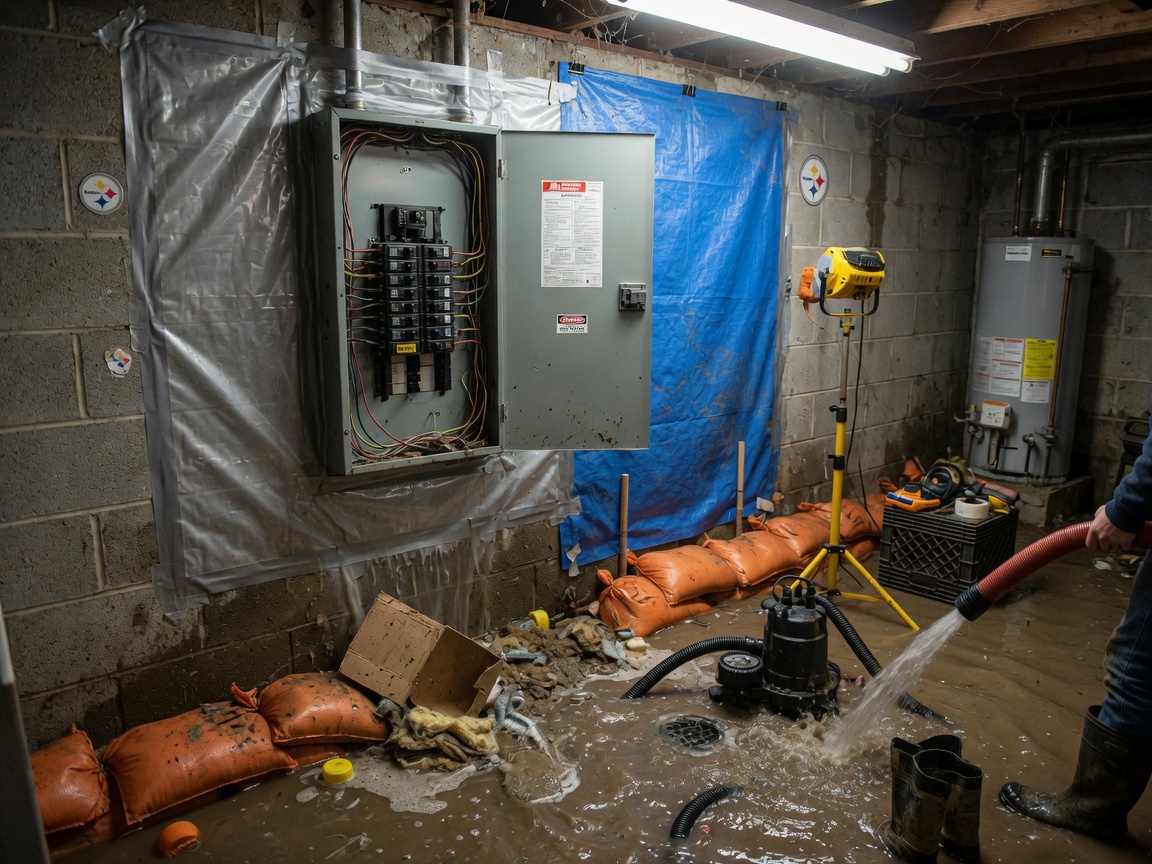
In North Hills homes built in the 1950s, protecting electrical panels during basement flooding begins with shutting off power at the main breaker before water reaches within 12 inches of any panel, followed by elevating wiring and installing GFCI protection rated for wet locations.
Local Flood Patterns Affecting North Hills Basements
North Hills East and North Hills West sit in a hot-summer Mediterranean climate where dry summers give way to sudden winter downpours that overwhelm older drainage around properties near North Hills Park and the Sepulveda Basin. These rains often pool against foundations of 1950s ranch houses, sending water into basements through cracks that develop over decades in the region's clay-heavy soils. Terrain sloping toward the basin channels runoff from Granada Hills and Panorama City streets directly into lower levels, raising water 18 to 36 inches in many cases before it recedes. This pattern repeats every few winters and differs from the flash flooding seen farther west in Van Nuys, where concrete channels move water faster. Homeowners who monitor basin levels and clear yard drains before storms reduce the volume that reaches panels by half in typical events.
Identifying Panel Vulnerabilities in 1950s Construction
Electrical panels in North Hills ranch houses are frequently mounted on basement walls at heights of 4 to 5 feet, yet wiring runs low enough that 2 feet of standing water creates immediate shock and short-circuit hazards. Original aluminum wiring and fuse boxes common in these homes corrode faster once moisture reaches them, shortening safe service life from the expected 30 years to as little as 15. Sump pumps installed decades ago often lack backflow valves, allowing Sepulveda Basin overflow to push water upward through floor drains and directly onto panel bases. Checking panel location relative to the lowest floor drain and noting any previous water stains on the wall below the box gives a clear picture of exposure before the next storm arrives.
Immediate Steps During a Flood Event
When water begins entering the basement, turn off the main breaker first if it can be reached without standing in water, then avoid all contact with outlets or switches until the space is fully dry. Document water depth with dated photos every 30 minutes to track rise rates, which in North Hills typically peak at 4 inches per hour during intense events. Move any portable dehumidifiers or fans already on site to higher ground to prevent them from becoming additional hazards. These actions limit damage to panels while waiting for extraction crews to arrive.
Professional Water Removal and Panel Recovery
Once water is extracted using Emergency Water Extraction, technicians test panel insulation resistance with megohmmeters to confirm no hidden moisture remains inside conduits. In many North Hills cases, panels exposed to basin-adjacent flooding require full replacement rather than simple drying because corrosion has already begun on bus bars. Follow-up Structural Drying targets wall cavities behind the panel for 48 to 72 hours to reach moisture readings below 12 percent. Homeowners in nearby Panorama City have seen similar results when crews address both the panel and surrounding soil saturation at the same time.
Preventing Future Panel Exposure
Raising the panel 24 inches higher during any Water Damage Restoration project and adding a dedicated GFCI breaker for basement circuits provides lasting protection against the next winter rain. Installing French drains around the foundation perimeter redirects water away from the house before it reaches the basement slab, a step especially useful on lots near North Hills Park where grading often slopes inward. Linking this work to regular Leak Detection visits catches slow plumbing issues that soften soil and increase flood volume. Readers can also review How to Spot Pipe Leaks in 1950s North Hills Ranch Houses and Mold Growth Timeline After a North Hills Kitchen Leak for related maintenance guidance that protects electrical systems indirectly.